




250 Years. 12 Stories. One County.
Long before the rise of Silicon Valley or modern political reform movements, Crawford County was quietly experimenting with ideas and technologies that would ripple across the nation.
From reshaping how Americans vote to illuminating city streets and cultivating reform-minded leadership, this rural Pennsylvania county repeatedly stepped forward as a civic and intellectual laboratory.
Innovation here was not limited to factories. It shaped democracy, journalism, infrastructure, and thought itself.
The Birth of the Primary Election
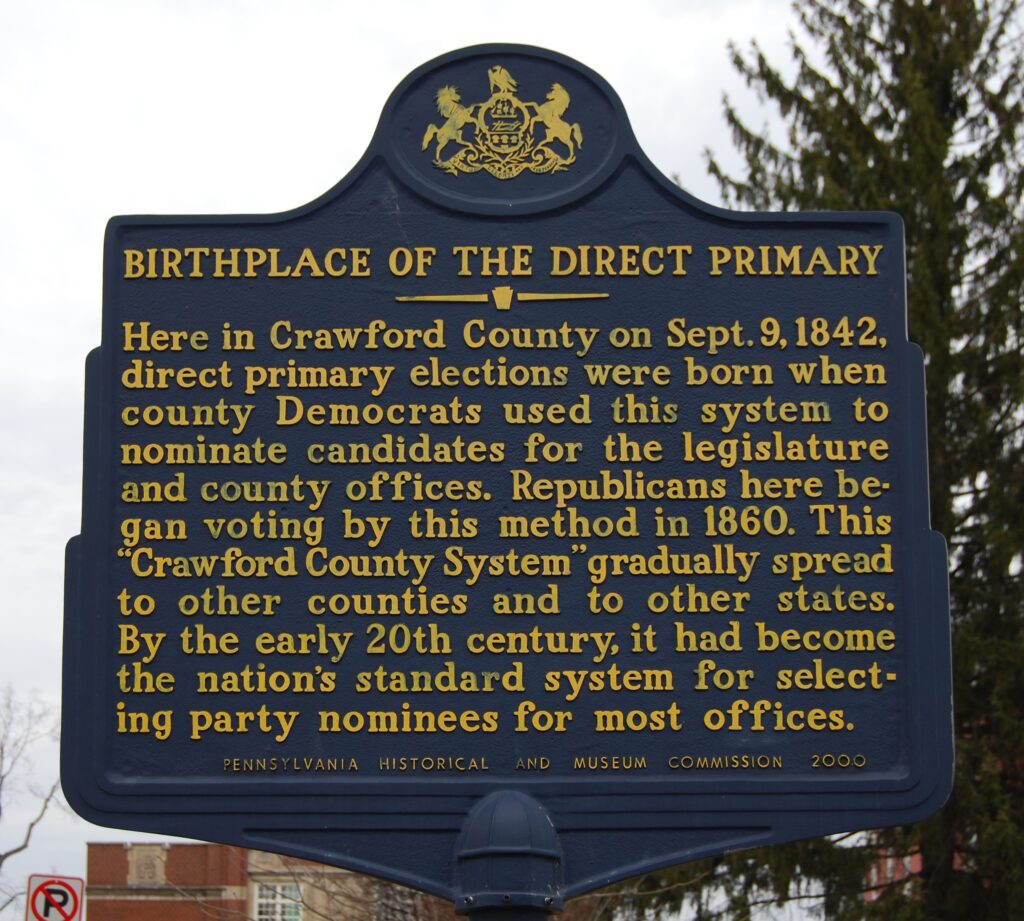
In 1842, local political leaders in Crawford County grew frustrated with party elites selecting candidates behind closed doors. Instead of relying on internal nominations controlled by a few insiders, they introduced a radical concept for the time: let party members vote directly for their nominees.
This became known as the “Crawford County System.”
It was the first documented use of a primary election in the United States. Over time, the model spread across Pennsylvania and eventually the nation, becoming the foundation of how Americans select candidates today.
A democratic reform born in a rural county reshaped the mechanics of American politics.
Lighting the Night
In 1888, Meadville became the second city in the world—after New York City—to illuminate its streets using electric arc lights.
At a time when most communities relied on gas lamps or lanterns, Meadville embraced emerging electrical technology. The installation signaled that this was not merely a frontier town or industrial outpost—it was forward-thinking and eager to adopt innovation.
The glow of those arc lights symbolized progress in western Pennsylvania.
Frontier Journalism
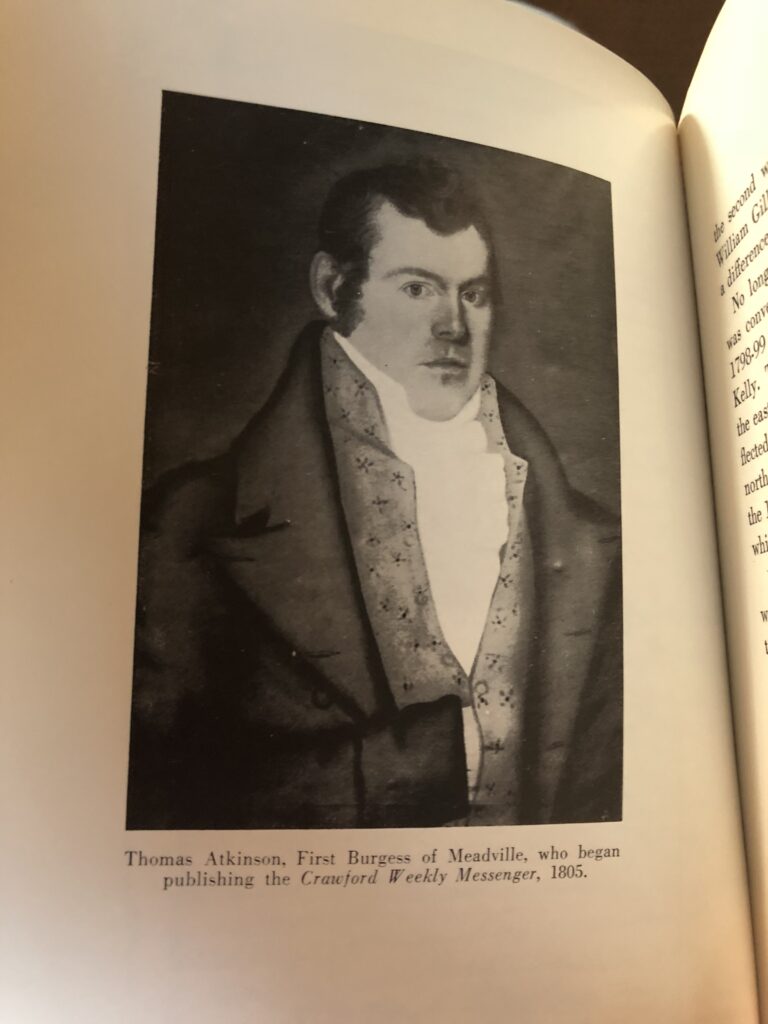
In 1805, the Crawford Weekly Messenger began publication, becoming the first newspaper printed west of the Allegheny Mountains.
On a developing frontier, access to information meant participation in national life. The paper connected residents to debates, policies, and economic changes shaping the young republic.
Crawford County was not isolated. It was engaged.
A Frontier of Ideas
Innovation in Crawford County was not limited to systems and technology. It extended to thought and reform.
In 1844, the Meadville Theological School was founded in Meadville. The institution became a center for Unitarian scholarship and progressive religious education during a period of westward expansion and national debate over morality, democracy, and social reform.
Ministers trained there carried ideas of intellectual freedom, civic responsibility, and the separation of church and state across the developing nation.
The same community experimenting with democratic elections was also cultivating reform-minded leadership.
Crawford County was helping shape not only how Americans voted—but how they thought.
The 3D Revolution Before Television
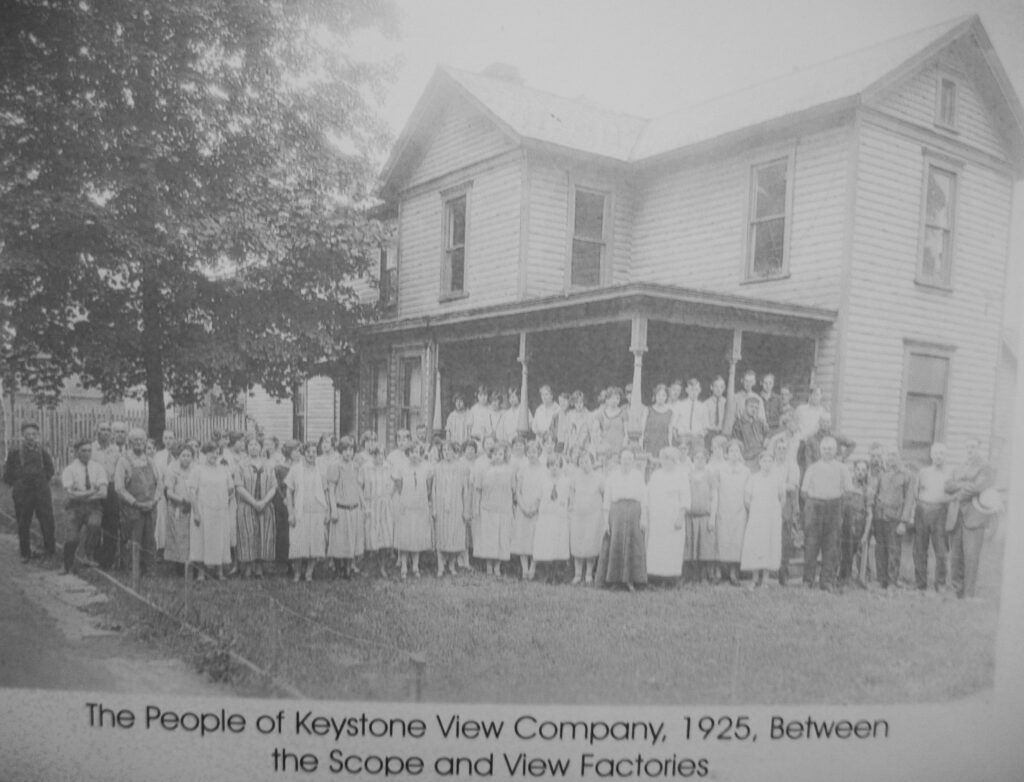
In the late 1800s, Meadville became home to the Keystone View Company, the world’s largest producer of stereographs—double-image cards that appeared three-dimensional when viewed through a special viewer.
Long before film or television entered American homes, stereographs brought distant places, historical events, and global scenes into living rooms across the country.
It was the 19th-century version of immersive media—and it was headquartered in Crawford County.
A Pattern of Civic Experimentation
What connects these achievements?
Each reflects a community willing to test new systems, adopt new technologies, and engage with national debates.
Political reform.
Electrical innovation.
Frontier journalism.
Religious and intellectual leadership.
Early immersive media.
Crawford County did not wait for ideas to arrive from elsewhere. It generated them.
Why This Matters for America 250
As the nation approaches its 250th anniversary, it is easy to focus on military battles or industrial breakthroughs. But the American story is also one of civic experimentation and intellectual courage.
Crawford County helped shape how Americans participate in democracy, consume information, embrace technology, and debate ideas.
In its own quiet way, this region influenced the framework of modern American life.
Experience This Legacy Today
Visitors can:
• Walk historic downtown Meadville
• Visit Allegheny College
• Explore local archives and historical societies
• Discover the institutions that carried forward a tradition of civic engagement
The spirit of innovation remains embedded in the community’s character.