




250 Years. 12 Stories. One County.
Before oil wells powered the modern world.
Before factories earned Meadville the name “Zipper City.”
Before lakes became destinations for recreation.
There was water, wilderness, and a strategic corridor that placed this region at the center of early American history.
The story of Crawford County does not begin in 1800. It begins decades earlier—when empires competed for control of the frontier and the land that would become Crawford County shaped the future of a nation.
The Land Before the County
Long before permanent European settlement, the region that is now Crawford County was an important Native American hunting ground and travel route. French Creek served as a vital artery connecting Lake Erie to the Allegheny River system, creating a natural transportation corridor through dense forest.
Control of waterways meant control of movement, trade, and influence. French Creek was not isolated wilderness—it was strategic ground.
That geography would soon draw global attention.
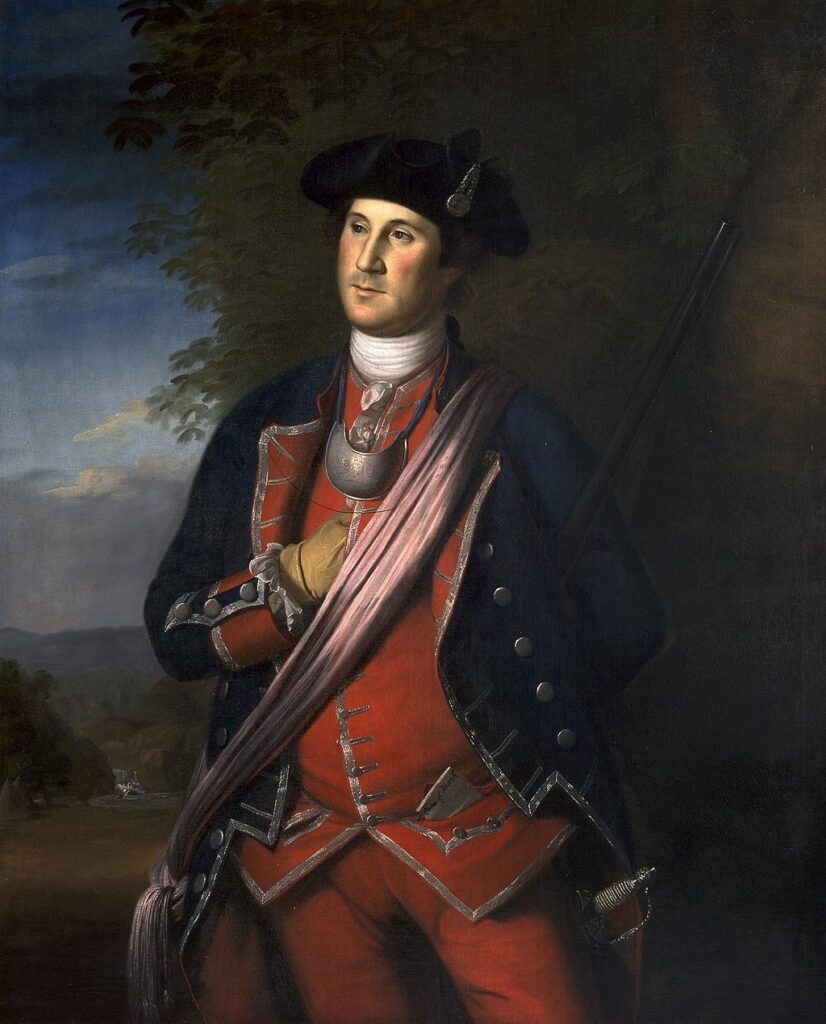
1753: A Young Washington on the Frontier
In 1753, a 21-year-old surveyor named George Washington traveled through the broader French Creek corridor on a diplomatic mission to the French. His journey helped ignite the French and Indian War—an international conflict that reshaped North America and set the stage for the American Revolution.
Today, that journey is commemorated through Washington’s Trail 1753, a designated heritage route tracing his path across western Pennsylvania.
Crawford County lies within this historic corridor.
Even before it had a formal boundary or a name, this landscape was connected to the forces that shaped the United States.
Settlement Takes Root: 1788
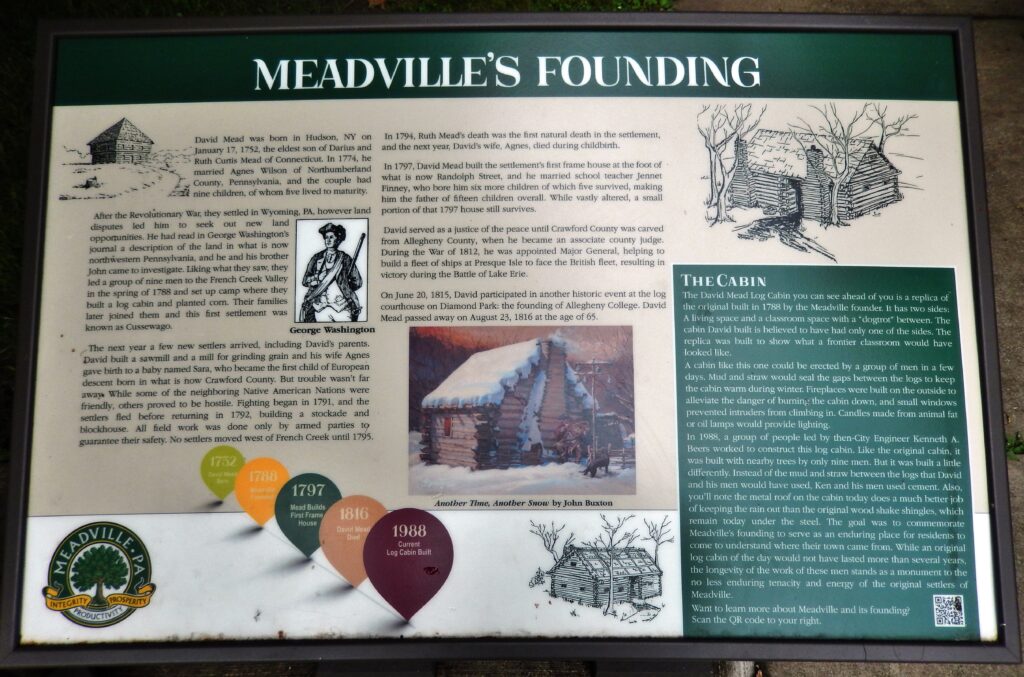
Permanent European settlement began in 1788 when David Mead and fellow settlers arrived from eastern Pennsylvania and established what would become Meadville—the first permanent white settlement in northwestern Pennsylvania.
The choice was intentional. French Creek provided waterpower and transportation. The surrounding land offered fertile soil and opportunity. Forest clearings became farms. Mills appeared along waterways. A frontier outpost slowly evolved into a structured community.
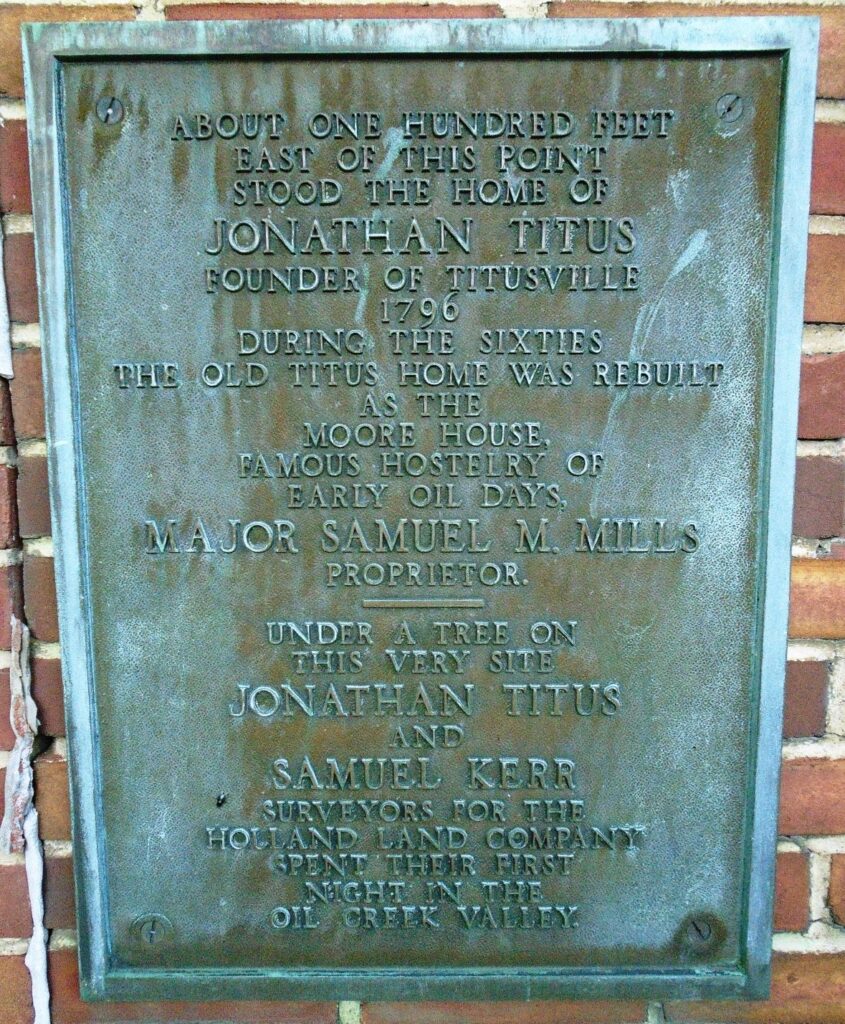
In 1796, Jonathan Titus founded Titusville as an agricultural and lumber settlement. At the time, no one could have predicted that this small town would one day launch the global petroleum industry.
March 12, 1800: Crawford County Is Formed
On March 12, 1800, Crawford County was officially created from part of Allegheny County. It was named for Colonel William Crawford, a Revolutionary War officer and associate of George Washington.
At its founding, this was still rugged frontier territory. Roads were primitive. Communication was slow. Travel depended on horseback and waterways.
Yet within a generation, the foundations of civic life were firmly established.
In 1805, the Crawford Weekly Messenger became the first newspaper published west of the Allegheny Mountains, connecting residents to national events and frontier developments.
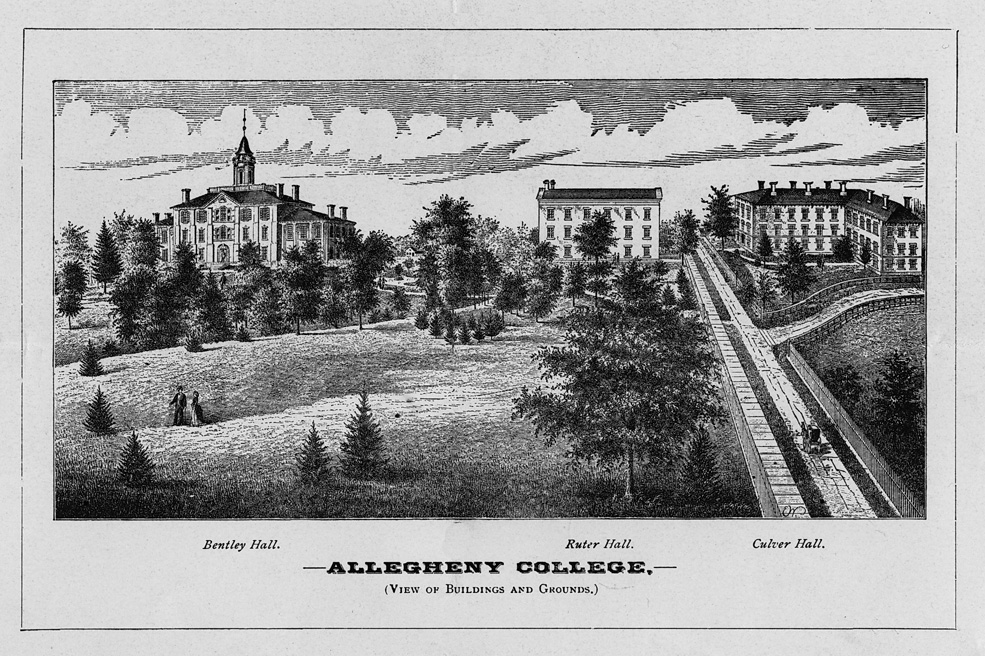
In 1815, Allegheny College was founded in Meadville, becoming one of the oldest colleges in the United States. Education, intellectual life, and civic engagement quickly became part of the county’s identity.
From wilderness corridor to organized county, transformation happened rapidly.
A Foundation for What Would Follow
The early decades of Crawford County were defined by resilience and forward momentum. Geography shaped opportunity. Waterways shaped commerce. Community shaped identity.
Those formative years laid the groundwork for everything that followed—the canal era, the railroad boom, the oil strike in Titusville, industrial innovation in Meadville, agricultural leadership, and the leisure destinations that would later define the region.
Crawford County did not emerge in isolation. It emerged at the intersection of land, ambition, and national change.
As America approaches its 250th anniversary, understanding these beginnings reveals something essential: this region has been connected to the American story from the start.
Experience the Origins Today
Visitors can still explore this foundational chapter by:
• Following portions of Washington’s Trail 1753
• Exploring French Creek and its historic corridor
• Walking historic downtown Meadville
• Visiting Allegheny College
• Discovering the towns that grew from frontier roots
The landscape that shaped early America remains part of Crawford County’s identity today.